The Full Story
A room people still talk about.
For roughly fifteen years, the Golden 8 Ball was the center of serious pool in Phoenix, Arizona — the largest pool hall in the United States, open twenty-four hours a day, seven days a week. This is the story of how it was built, what happened inside it, and why people still remember it decades after the doors closed for good.
Late 1970s – 1980s
A young man's vision
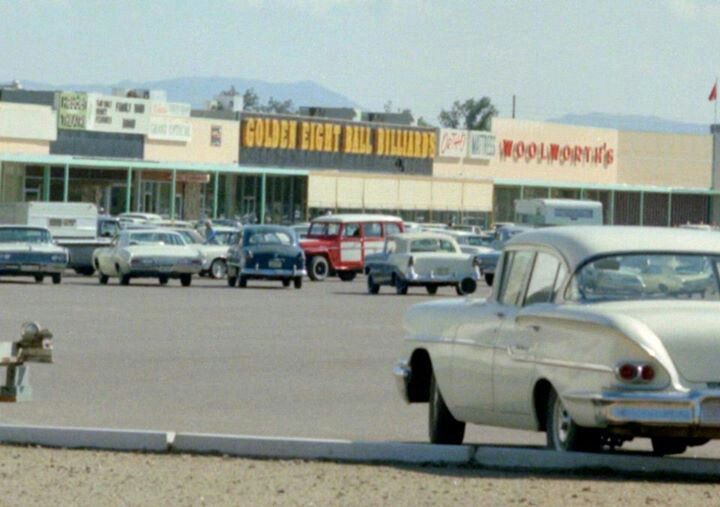
David Lee was twenty-seven years old when he acquired the Golden 8 Ball. The original location sat at Indian School Road and Grand Avenue in the Price Club Plaza — roughly eight thousand square feet holding twenty tables. It was, from the start, something different from the dark, smoky stereotype of a Phoenix pool room.
Lee ran the place like a fine establishment. Staff wore black pants and tuxedo shirts and were constantly wiping down tables. The equipment was first-rate: Gold Crown nine-foot tables, bar tables, snooker, and carom. There was a full kitchen, a pro shop, and the doors never locked — the Golden 8 Ball operated twenty-four hours a day and welcomed families alongside road players and hustlers.
Danny DiLiberto was instrumental in building the room's identity. He wasn't just hired help — he was a co-builder, a resident professional whose presence signaled to the billiards world that this room in Phoenix was real. DiLiberto ran weekly clinics, played challenge matches, and lent the Golden 8 Ball the kind of credibility that money alone can't buy.
College kids from nearby schools mixed with serious players and neighborhood regulars. The atmosphere was family-friendly but competitive. People noticed.
"Amazing... I'd never seen such a dedicated pool hall in Phoenix."
1986
The largest pool hall in the United States
In 1986, the Golden 8 Ball moved to 2740 West Indian School Road, near 27th Avenue. The new space was enormous — sixteen thousand eight hundred square feet holding forty tables. It was, by every credible account, the largest pool hall in the United States.
"Places like the Golden 8 Ball, a 24-hour pool bar that allowed all ages, could only exist in that time."
The twenty-four-hour schedule continued. The bigger room drew an even wider crowd. Serious players came for the tables and the action. College students came because it was open all night and the food was decent. Even the Phoenix underground music scene found a home there — in the mid-to-late 1980s, the Golden 8 Ball was one of those rare places that existed outside normal hours and normal rules.
1980s – Early 1990s
It was THE spot
At its peak, the Golden 8 Ball was the room in Phoenix. Not one of the rooms — the room. The action was constant: gambling, tournament play, challenge matches, and the steady hum of serious pool happening on multiple tables at all hours.
"One of the best pool halls around... big room, nice bar, tons of 9-foot Gold Crowns... a true pool player's room."
Danny DiLiberto anchored the room as resident pro. His weekly clinics drew students and fans. His challenge matches drew gamblers and spectators. And the stream of visiting road players who passed through the Golden 8 Ball reads like a who's who of American billiards: Ronnie Allen, Keith "Earthquake" McCready, Bill "Beenie Weenie" Incardona, Dennis Hatch, CJ Wiley, and Nick Varner, among others.
David Lee once put it this way: "Many a road player came through the Golden 8 Ball, but they became residents because they couldn't afford to leave." The action was that good, and the money moved fast enough to keep top players in town far longer than they'd planned.
In 1988, Ronnie Allen and Danny DiLiberto played a one-pocket match at the Golden 8 Ball that was later released on DVD by Jay Helfert — a piece of billiards history captured inside those walls. The following year, in 1989, the Golden 8-Ball Invitational was won by Nick Varner, adding another tournament credential to the room's growing reputation.
"The action was insane... all the time."
The room had glamour and grit in equal measure. There was a one-pocket master known only as "Lefty," a quiet presence who rarely spoke and rarely lost. There were stories that belong in a different kind of book. As one regular put it: "What's a great pool room without a bit of depravity? That's right, a boring one."
1990s
Decline and closure
The neighborhood around 27th Avenue and Indian School Road deteriorated through the early 1990s, and the Golden 8 Ball couldn't escape the consequences. The broader industry was under pressure too — video arcades pulled younger crowds, tighter DUI enforcement kept people home at night, anti-smoking laws changed the culture of indoor gathering places, and a recession thinned out discretionary spending.
"It was sad watching it slowly decline over the years."
Violence became a real problem. Shootings in and around the hall led to police crackdowns. On New Year's Eve 1994, a patron known as "Old Man Bob" shot an armed man in self-defense inside the Golden 8 Ball — no charges were filed, but the incident captured what the room had become by then.
By the mid-1990s, the Golden 8 Ball was closed. The building was eventually razed. Nothing marks the site today.
"I was a teenager when the Golden 8 Ball was at 27th Ave and Indian School... Pretty sure it got shut down because of some shootings."
Legacy
Still remembered, still being preserved
Ask anyone who played pool in Phoenix during those years and the answer comes back the same way: "Absolutely! What a great room!" The Golden 8 Ball wasn't just a pool hall — it was a place that shaped how people understood the game and each other.
"I played a lot there. I was a poor college kid back then... so many good times."
In 2024, David Lee was inducted into the Arizona Billiard Hall of Fame, a long-overdue recognition of what he built. The Golden 8 Ball History Project was launched to gather the stories, photos, and memorabilia that remain scattered across the community before more of the record disappears.
That work is especially urgent because David Lee lost much of his personal memorabilia — lent out over the years and never returned. The history of this room now depends on community contributions: photographs, tournament brackets, flyers, and the memories of people who were there.
The tradition continues. David Lee is now the general manager at Metro Sportz Bar, where the spirit of competitive Phoenix billiards lives on. The room is different, the era is different, but the commitment to the game remains.
"Yes, it was a nice, large room... I wish it was still around."
Chronology
Fifteen Years, One Room
- c. 1980
David Lee opens the Golden 8 Ball
Indian School Road and Grand Avenue, Phoenix. Twenty tables, eight thousand square feet, a 27-year-old with a vision. The doors never locked.
- Mid-1980s
Danny DiLiberto arrives
BCA Hall of Famer. Road player since the 1950s. As house pro and co-builder, he turned a Phoenix pool hall into a national destination.
- 1986
Expansion: the largest pool hall in America
2740 West Indian School Road. Forty tables, 16,800 square feet. Gold Crown nine-footers, snooker, carom, full kitchen, pro shop. Open 24 hours.
- 1988
Allen vs. DiLiberto one-pocket match
Ronnie Allen and Danny DiLiberto played a legendary one-pocket match, later released on DVD by Jay Helfert.
- 1989
Golden 8-Ball Invitational
Nick Varner takes the title. The tournament cements the room's national reputation.
- Mid-1990s
Decline and closure
Neighborhood deterioration, rising violence, changing economics. The Golden 8 Ball closes. The building is eventually razed.
- 2024
David Lee enters the Hall of Fame
Inducted into the Arizona Billiard Hall of Fame. The Golden 8 Ball History Project launches.